We want to begin with immense gratitude.
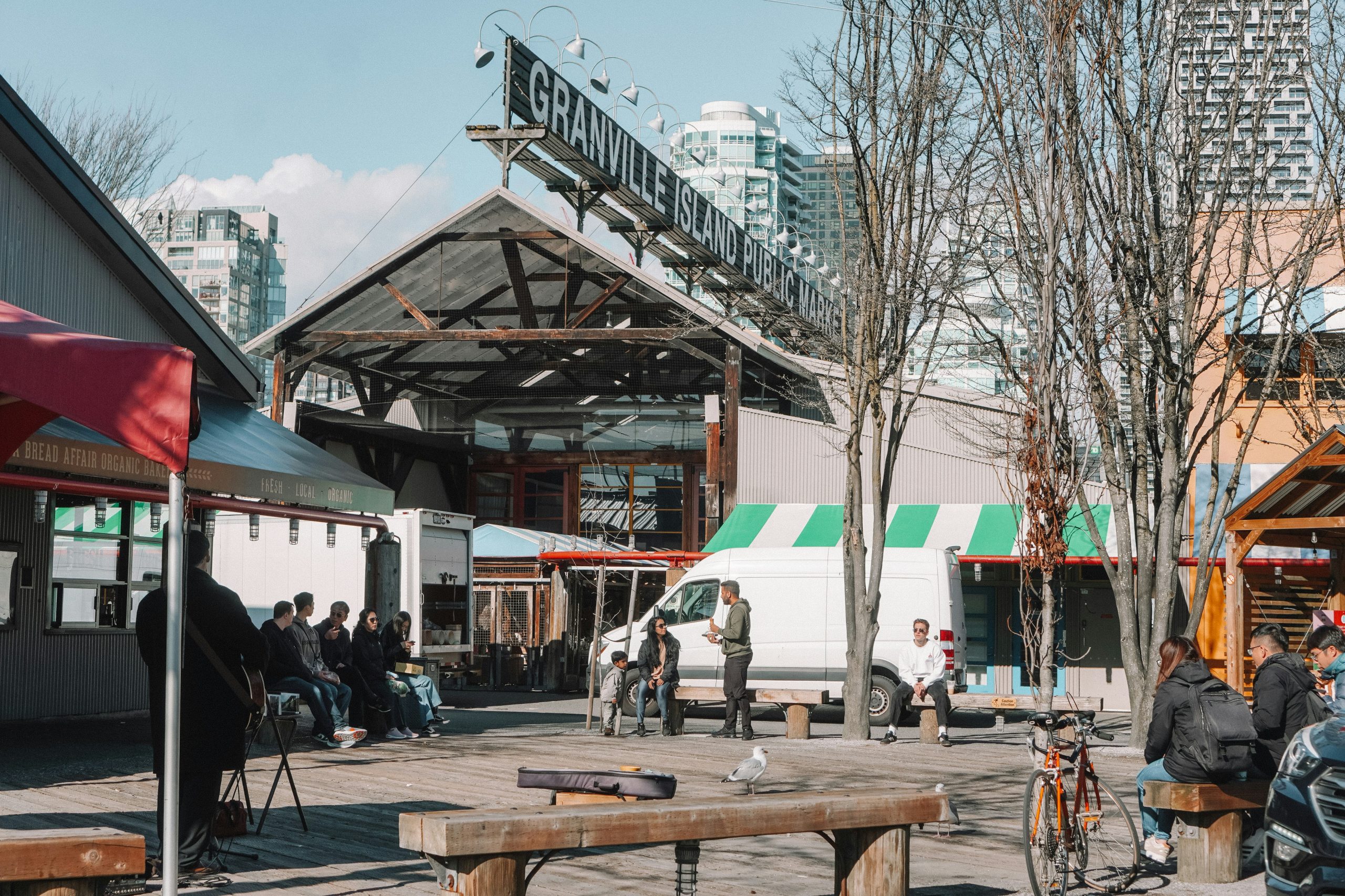
For the past year, 221A and its collaborators engaged in a long and thoughtful process of reimagining the former Emily Carr University North building on Granville Island as a hub for cultural innovation for artists.
Being shortlisted allowed us to share a dream shaped by our collaborators of sən ̓aʔqʷ as a gathering place for visitors and locals alike, centring xʷməθkʷəy ̓ əm (Musqueam), Sḵwx ̱ wú7mesh (Squamish) and səlilwətaɬ (Tsleil-Waututh) Nations as the rights and title holders of these lands.
While our proposal was not selected, the process laid foundations for the continuation of our work in advocating for creative economies and viable solutions to the increasing disappearance of arts and cultural spaces in the city. CMHC is yet to finalize a formal agreement for its Arts & Innovation Hub.
This project brought together an extraordinary group of collaborators: artists, cultural workers, designers, educators, weavers, thinkers, organizers, and community members who gave their time, trust, and imagination to a shared vision. We are deeply grateful for the conversations, the site walks, the drafts, the late-night calls, the questions that sharpened the work, and the care that held it. We continue to build relations with arts and cultural leaders from the Nations and to highlight their enduring relationships with this place.
In particular, we wish to acknowledge θəliχʷəlʷət Debra Sparrow whose leadership grounded the proposal, and whose practices continue to teach us how cultural space can be stewarded with responsibility, continuity, and generosity. The ideas that emerged—around textile traditions, shared governance, education, and cultural land stewardship—are not bound to a single building or process. We remain committed.
Immense gratitude to Tomo Spaces, Burrard Properties, Human Studio Architecture, for trusting in a shared vision of a Cultural Land Trust. Working alongside collaborators who are rooting for a co-governance model that prioritizes artists, cultural workers, and communities, nurtures the soil for creative economies to flourish.
We also want to thank the Granville Island team and CMHC for the care and rigour of the process, the proponents who took part in the RFEOI process, and for the opportunity to contribute to an important conversation about the future of cultural infrastructure in this region.
To the artists we serve, the work continues! 221A remains to create pathways for collective ownership for artists.
With gratitude,
Brian McBay
221A Executive Director