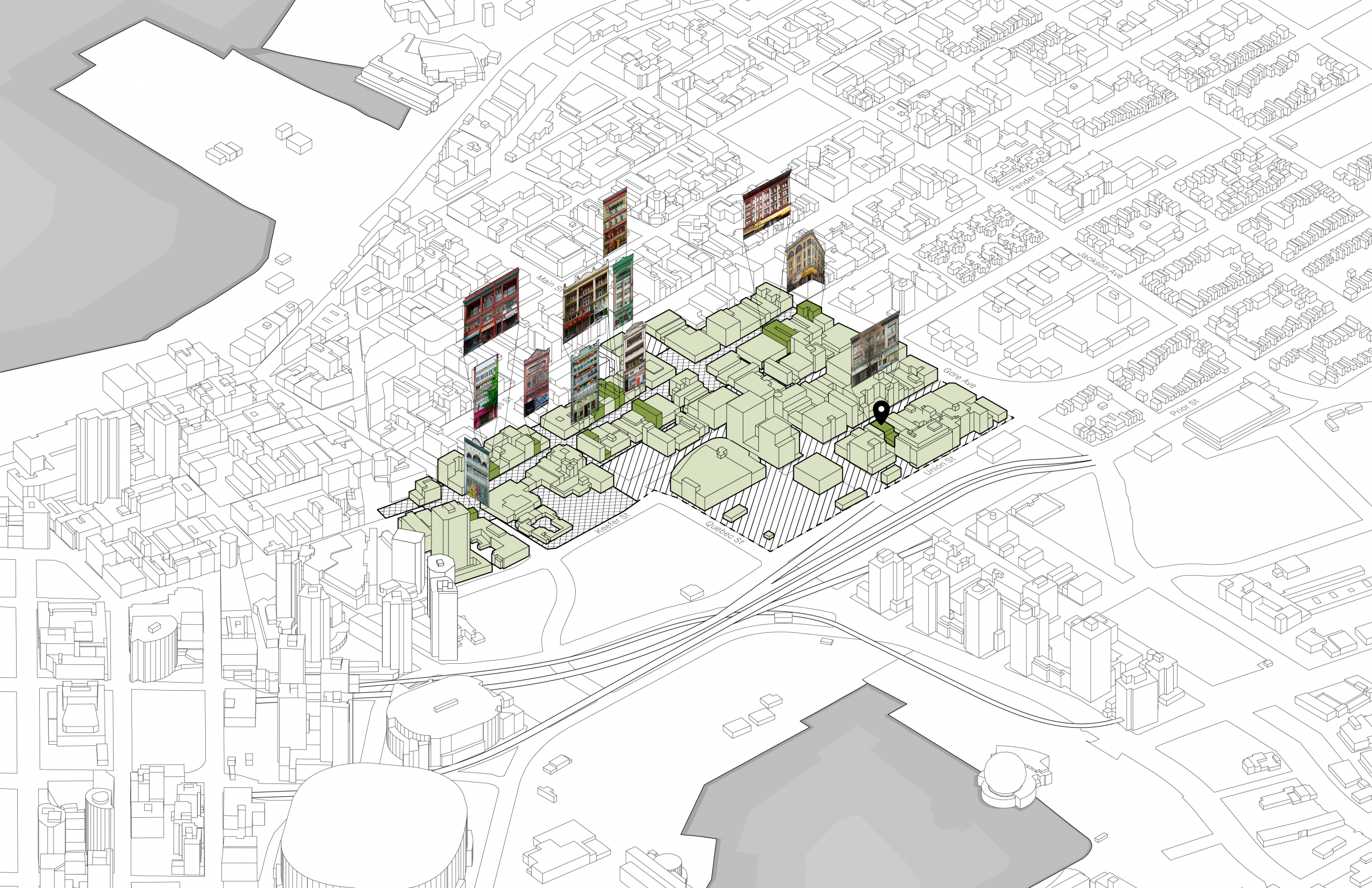
The Chinatown Context and Challenges of Stewardship
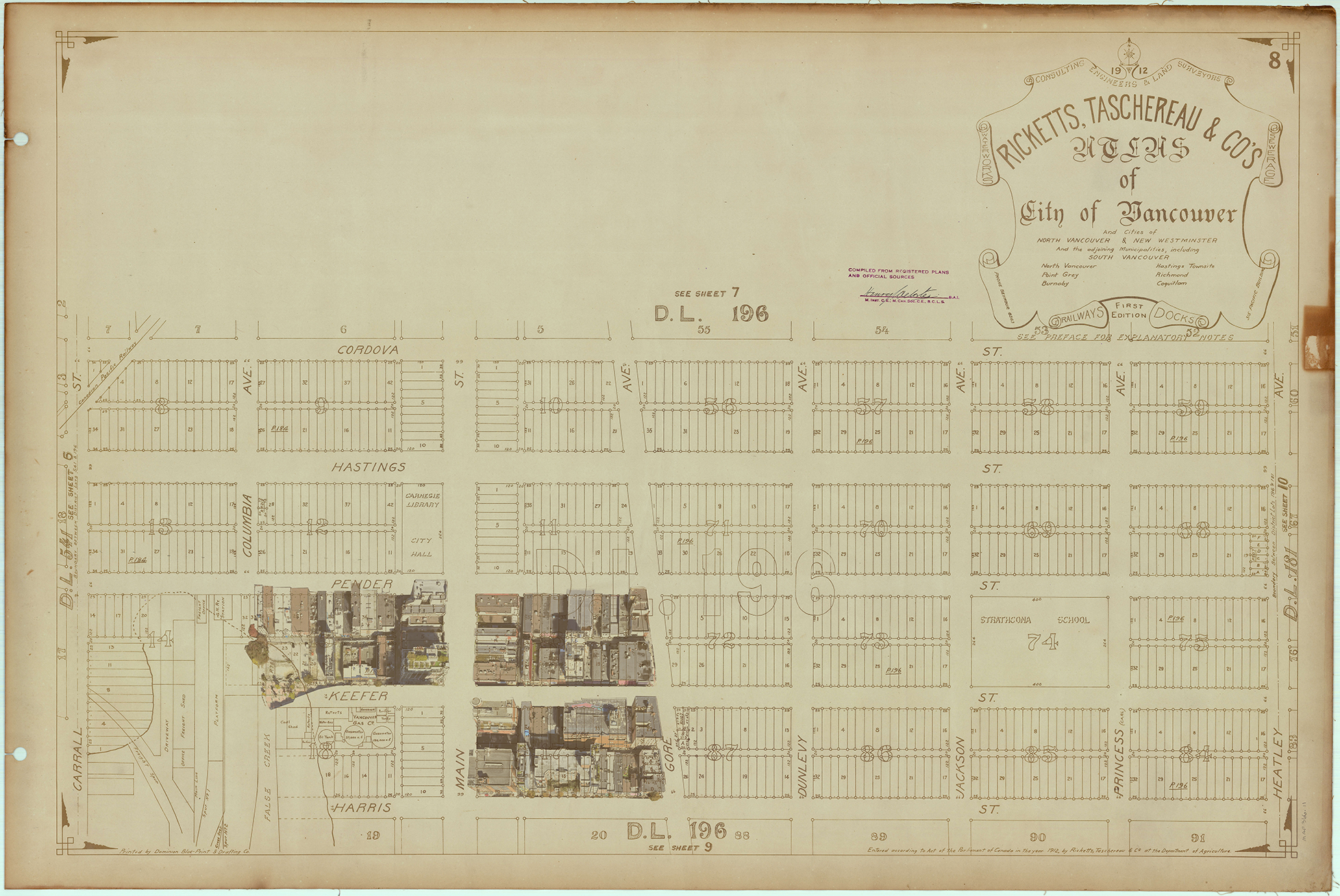
The history of Vancouver’s Chinatown is inextricably linked to the history of benevolent societies. Chinatown’s historic benevolent societies were founded not merely for social gathering but for mutual aid and collective survival. They have long functioned like community land trusts, pooling resources to provide kinship and essential support based on clans, counties of origin, or shared interests. These societies represent living and intangible heritage that exceed the tangible culture of heritage buildings or facades. Today, these societies face challenges including gentrification, rising land values, aging infrastructure, and lack of succession by younger generations.
The Co-Development Model
The Yee Project proposes a form of cultural renewal that is not premised on dispossession but rather on strengthening existing community bonds and assets.
A Vision of Intergenerational Collaboration
The project is a partnership between 221A and the Yee Fung Toy Society (Yee Society)
- The Yee Society is one of Chinatown’s historic benevolent societies. Established in 1904, it has owned the building at 222-226 East Georgia since 1950, serving as its headquarters and providing housing for Chinese seniors.
- Starting as a student-led initiative in 2005, 221A is a nonprofit cultural organization that works to secure the long-term viability of cultural spaces by navigating the complexities of urban development and policy. In 2008, 221A followed its Co-Founders’ roots in Chinatown to establish its first public exhibition space at 221 East Georgia. It has operated 222 East Georgia as a collective art production and presentation space since 2011.
221A’s beginnings and continued location in Chinatown allowed us to understand the neighbourhood’s challenges firsthand and taught us the grassroots advocacy, resilience, and collective spirit that define the Chinatown community. In particular, the neighbourhood’s transformations before and after the 2010 Winter Olympics crucially shaped 221A’s mission and values.

The Approach
- Ground Lease Partnership and Retained Ownership: At the heart of the Yee Project is a long-term lease and regenerative model. Land is provided through a long-term ground lease from the Yee Society to 221A. Yee Society retains legal ownership of the land, while 221A can borrow against the land and building to fund the development.
- Historic Legacy and Cultural Programming: The proposed 46,000ft² project includes a dedicated Yee Society Hall to ensure that the Yee’s presence remains a cornerstone. Over 30 units of non-market housing for artists and seniors, including family units, are included alongside cultural spaces and commercial retail.
- Financial Sustainability: Financial viability is supported by a portion of the project that generates commercial rates to balance affordability of housing and cultural spaces, in addition to a diverse funding stack of grants, loans, and philanthropy.
- Design and Heritage: The architectural approach honours both tangible and intangible heritage. The project also explores the unique “50’ lot” typology characteristic of Vancouver’s Chinatown, aiming to maximize floor space while preserving the historical and future context of the neighborhood.

Timeline and Milestones
- 2021 – Feasibility and Business Plan
- 2024 – Schematic Design
- Late 2024 – 80% Development Permit
Reflections
As a pilot initiative, the project has offered valuable insights into the challenges and opportunities of community-led development:
- Collective Decision-Making: Building consensus within a historic benevolent society requires deep relational trust and different timelines than typical private sector projects.
- Relational Infrastructure: The project recognizes that building relationships is as resource-intensive as building physical architecture.
- Complex Funding: Navigating a multi-sector funding stack involving three levels of government and private philanthropy requires flexibility to adapt to the different requirements, availability, and timeline of various funding programs.
Where We Are Now
At this stage, the Yee Project is in an intentional period of pause to match the organizations’ shared readiness and momentum. We are currently taking this time to strengthen our partnership and align our visions through formalizing our agreements. We are also continuing to navigate the complex funding programs from three levels of government and private philanthropy to ensure the project remains viable long term.
Resources and Knowledge Sharing
As part of 221A’s commitment to the community housing sector, several tools developed through the Yee Project are being made available for wider adoption:
- 50’ Lot Booklet (Architectural research and schematics)
Please contact hello@221a.ca to obtain a copy of these:
- Key Lease Terms Template
- Ground Lease Template
- MOU Template
- Financial Proforma Template
Acknowledgements
The Benevolent Society Partnership project received funding from Canada Mortgage and Housing Corporation (CMHC) under the NHS Demonstrations Initiative, however, the views expressed are the personal views of the author and CMHC accepts no responsibility for them.
Le projet Partenariat de Société de bienveillance a reçu du financement de la Société canadienne d’hypothèques et de logement (SCHL) en vertu de l’Initiative de démonstrations de la SNL. Cependant, les opinions exprimées sont les opinions personnelles de l’auteur et la SCHL n’accepte aucune responsabilité à l’égard de telles opinions.
Project Support